

I shamelessly love Disney movies. I think that they’re fun, magical, and, every now and then, can have some wonderful lessons. Frozen 2 is no exception. At one point, we find Anna–one of the protagonists– at her wit’s end. She’s alone in a cave, and she believes that her nearest and dearest friends are gone. In her words:
“I’ve seen dark before, but not like this. This is cold, this is empty, this is numb. The life I knew is over. The lights are out. Hello, darkness, I’m ready to succumb.”
For those who struggle with depression, this sentiment may sound familiar. There’s an emptiness and coldness, a sense that you can’t go on. Practically, this may mean you spend more time in bed than you should. Maybe it looks like going a few days without showering, or eating once a day (if you’re lucky). Maybe it looks like pulling away from your friends, avoiding your counseling appointments, and leaning into isolation. This brings up the question: What should I do when I feel like I can’t do anything?”
The Next Right Thing:
Aaron Beck was a professor of Psychiatry at the University of Pennsylvania, and came up with what he refers to as the Beck Cognitive Triad. Essentially it says that depression is fueled by three interconnected negative thoughts: A negative view of oneself, a negative perception of the world, and a hopeless outlook on the future.
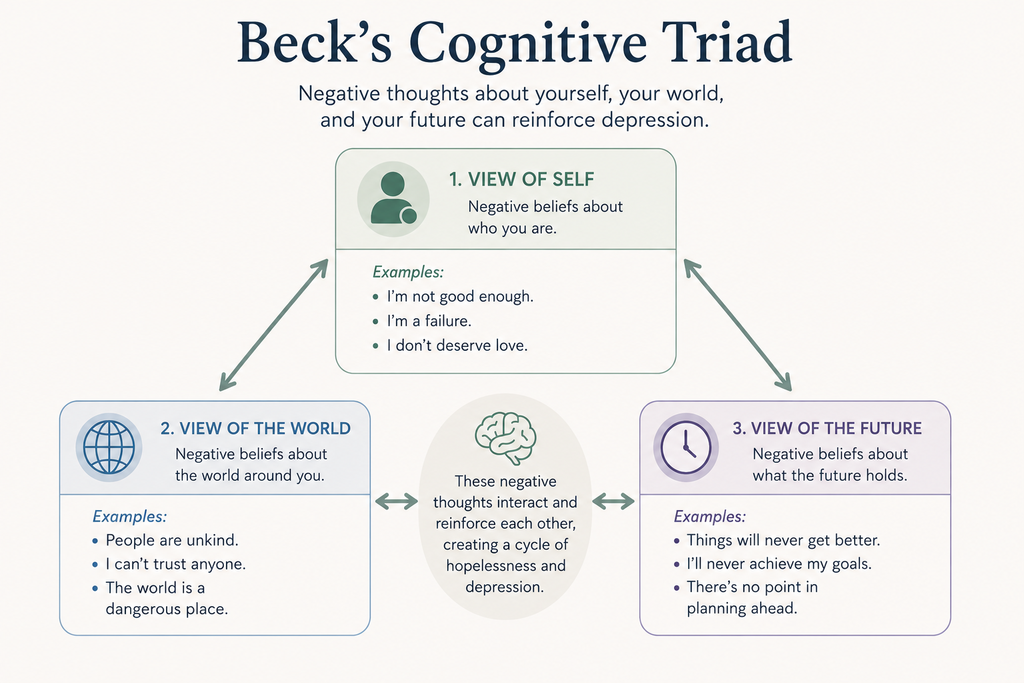
Many treatments of depression focus on addressing aspects of these negative patterns. However, those thoughts can be hard to unseat when you’re barely able to function. That’s where I think that Anna can help us out a little bit. As the song continues, she says that she will “take a step, step again. It’s all [she] can do.” This recognizes the fact that maybe the next best thing to do is to simply keep living and moving forward.
Breaking down the steps:
One of my favorite parts in the song is near the end: “I won’t look too far ahead, it’s too much for me to take. But break it down to this next breath, this next step, this next choice is one I can make.” I love it because it’s so honest. If you’ve experienced depression, you know how debilitating tasks can feel. This approach doesn’t look into a far away future which may appear hopeless. It looks into the very next step.
Depression can represent a cycle of withdrawal. We remove ourselves from daily life more and more. This withdrawal from life contributes to feelings of shame. This shame piece is at the core of Beck’s triad; shame tells us that we aren’t good enough. Our shame leads to greater withdrawal. Breaking down the steps of what we need to do to care for ourselves is a way that we can break from the cycle.
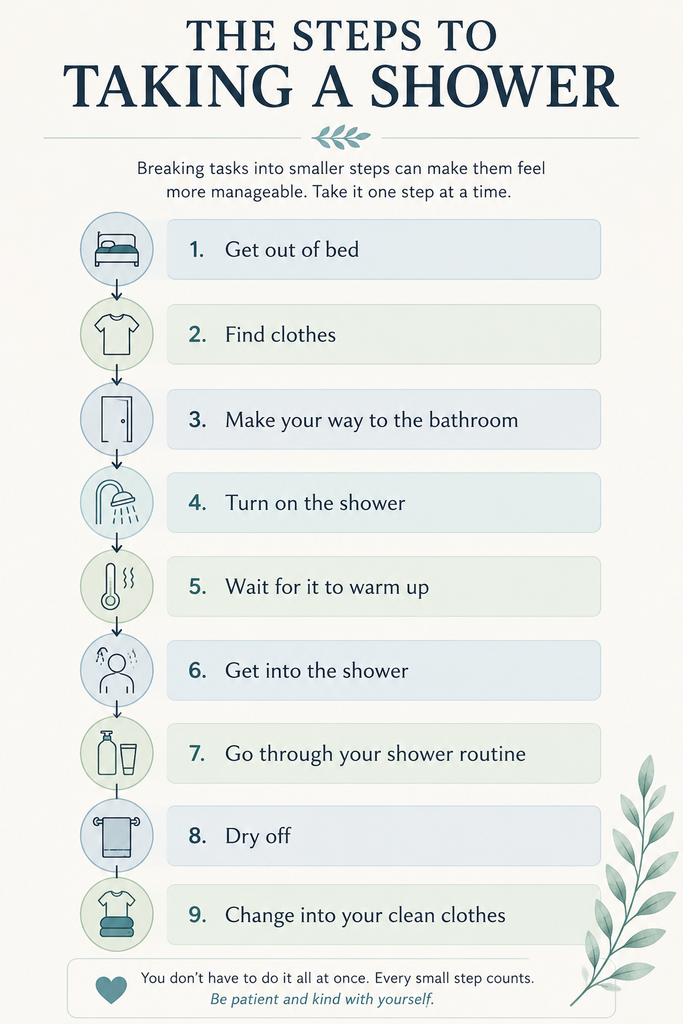
One practical piece of advice: if you can’t do much, do anything. Let’s consider the task of taking a shower. That may seem like one task, but it really represents a bunch of tiny tasks. By breaking it down into the most basic next steps, we give respect to the actual effort that went into the process. Consider this flow chart:
Self-compassion and Self-care:
You may have read the breakdown of the tasks involved in a shower and felt overwhelmed. I believe that this is where the conversation of self-compassion and self-care comes in. Self-compassion means having the same warmth and kindness towards ourselves that we would have towards a friend. If you feel that you cannot take a shower, you may feel ashamed. Self compassion tells us: “You are operating with less emotional resources than you normally possess right now. Be kind to yourself.” Self compassion invites us to celebrate the courage of simply getting out of bed.

In a similar vein, self-care is the act of taking ownership of your health and wellbeing using the resources available to you. This may look like a spa day, this may look like taking a shower, this may look like going to a movie with some friends. The main thing to consider in self care is if it contributes to your wellbeing, and helps you feel more connected to yourself, others, and the world around you.
Breaking things down into bite-sized tasks help us attack our negative perception of self, and our negative perception of the future. By growing in our agency, and allowing ourselves to be loved and cared for by others, it may just affect how we view the world as well.
An Invitation into the Next Right Thing:
The last thing that we want as mental health practitioners is to add to the list of things you feel that you “just can’t do right.” The counseling room should be a place where self-compassion and self-care join in chorus, and where the next “right things” are celebrated as the acts of courage that they are. My goal in counseling is to point out and celebrate every small step taken as a profound victory. If you’re interested in finding out what your next right step could look like, I would love to be a part of that process.