

If an outside observer were to sit in on a play therapy session, they may be a little confused. How is playing in sand going to help my child to stop getting in trouble at school? What does playing uno mean for helping with my child’s relationship with his siblings?
These questions are fair, and often come up when trying to explain to a concerned parent what our work looks like. According to Garry Landreth, one of the most prominent voices in the Child-centered play therapy movement, “play is the language of children, and toys are their words.” If play is the language that children use, it’s worth us to take the time to learn the language, and ask an important question: What is happening when my child is in play therapy, and what does the play therapist do?
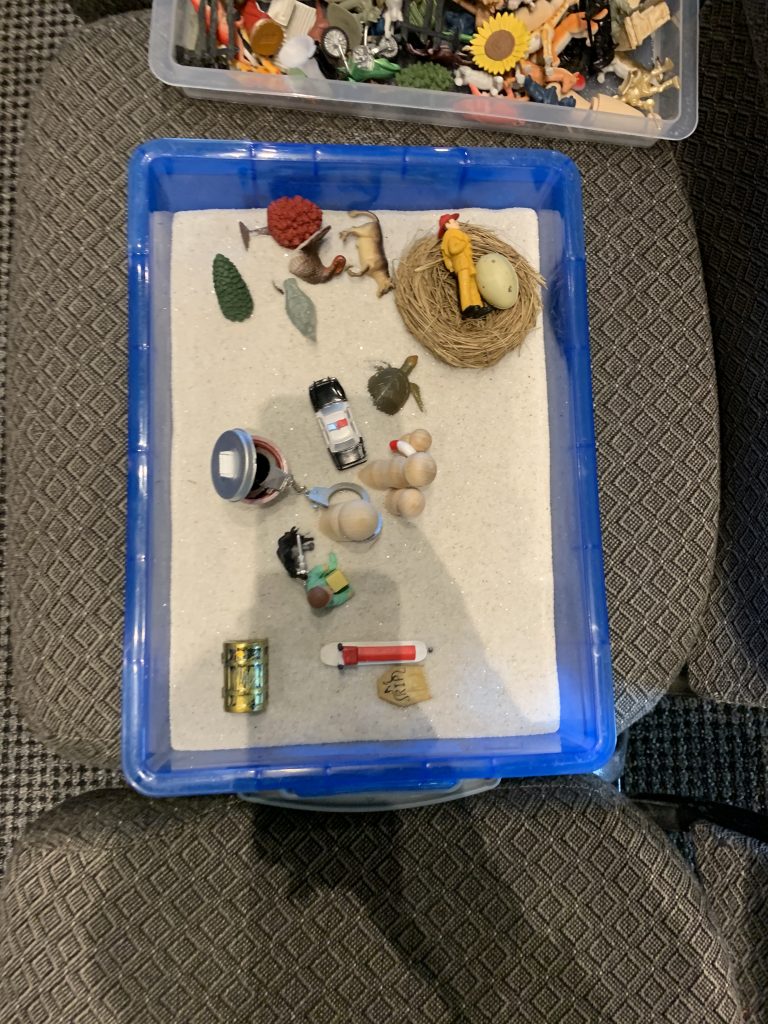
Learning the language your child speaks
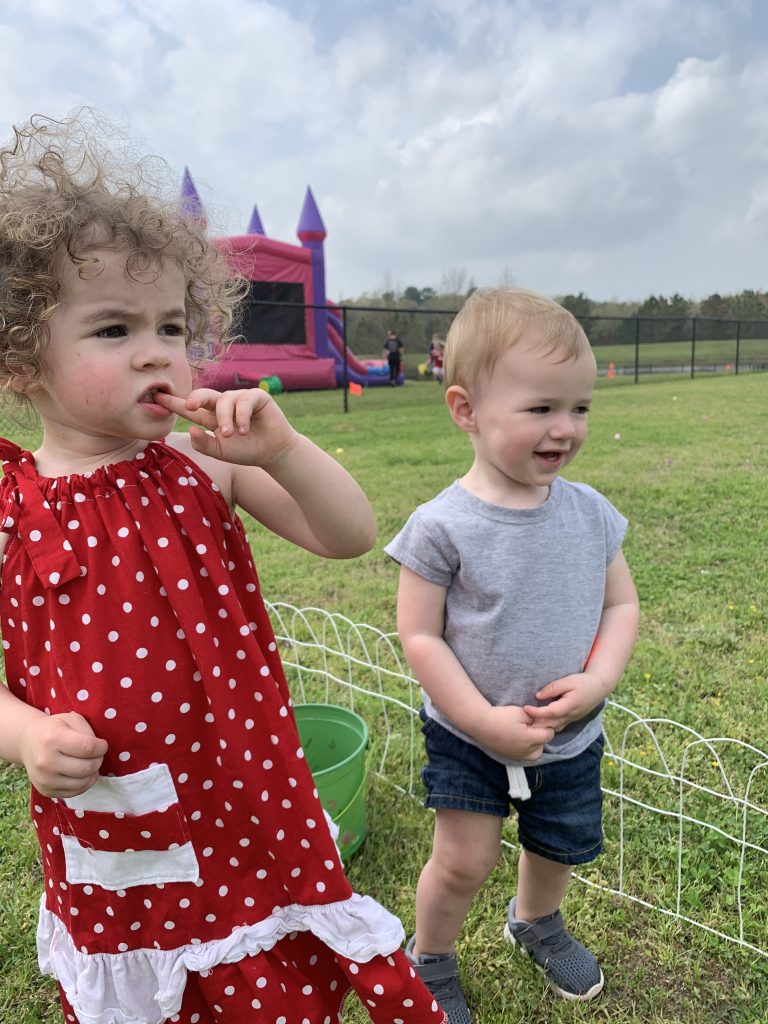
According to Jean Piaget, children from ages 2-7 are in the preoperational phase. This is when children begin to develop language, and can begin to think symbolically. However, this stage is also defined by a struggle to see things from other people’s perspective. Any parent whose three year old asks “why?” 100 times a day isn’t surprised by this fact. This is the stage where children can begin to develop empathy and explore other perspectives.
Around 7-11, children begin to think more logically. They begin to gain a sense of how to order and categorize objects and ideas. But this is just the start of their process. Up until this point, their formal practice has been limited. As adults, we often experience the world rationally. From a developmental perspective, children don’t have much experience with rationality yet.
From the perspective of the parent, this can become frustrating. In our logical, rational brain, we often think that our children should respond and act in a certain way. The problem is that our children are not driven by logic and reason much of the time. If we engage with children in the same way that we engage with adults, there will be glazed-over eyes, and a bunch of “I don’t know” answers.
Despite the lack of a fully developed sense of rationality or logic, there is no shortage of big emotion coming from little people. So how do we get little people to begin to understand their emotions? In short: Through play. Lev Vygotsky famously stated that, from a developmental perspective, “In play a child is always above his average age, above his daily behavior; in play it is as though he were a head taller than himself.” In play, children navigate their emotions in the same way that an adult would work through theirs in traditional talk therapy.
In play, children get to work through what they are carrying emotionally in their own language and in their own way. The goal of the counselor in play therapy is to provide observations and insights into what a child is expressing when they play. The counselor gets to serve as a safe, guide and interpreter of the play that is occurring within the playroom.
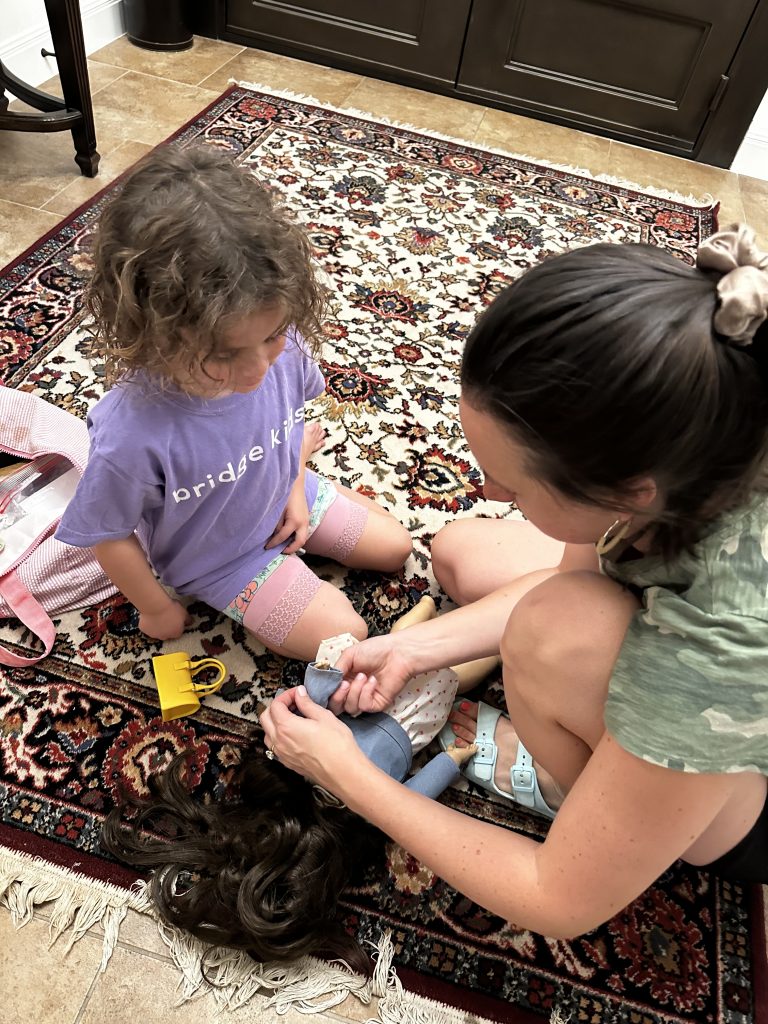
Play as Practice for life
Think about a game of uno (not sponsored, though we do play a lot of uno). In a simple card game, children learn about:
- How to take turns
- How to follow rules
- How to strategize
- How to set and respect boundaries
- How to emotionally regulate when things don’t go their way
This is the foundation of prosocial emotional development. Even if we don’t explicitly mention healthy coping mechanisms or emotional regulation techniques, the play therapist gets to model these traits and abilities in a way that a child can understand.
Play as a way to connect
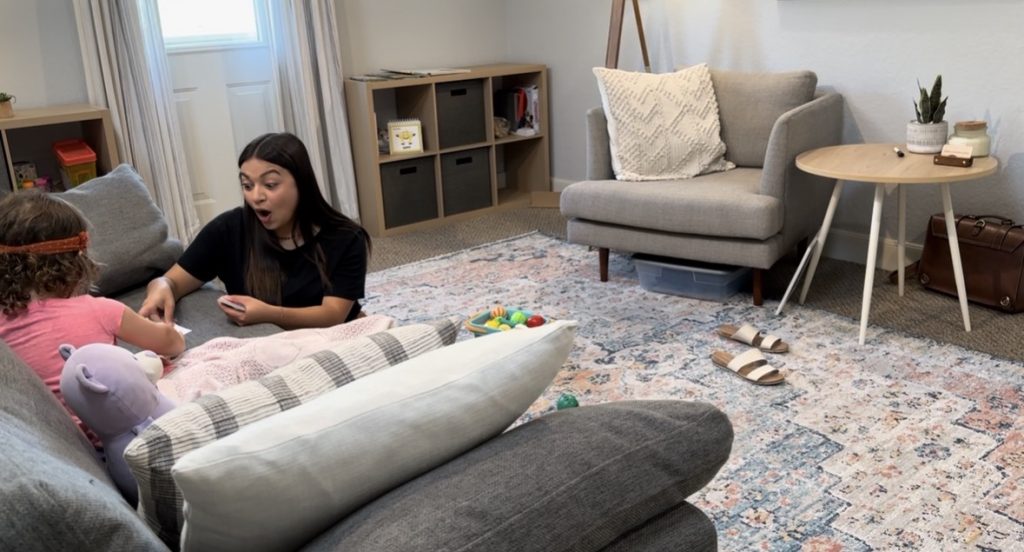
One thing that’s true of play: it only really happens when a child feels safe. Many times in early sessions with children, there can be a hesitancy around play. Especially if there is a history of trauma, children may not play the first session or two. They’re trying to find out if the counseling space is a place where they can truly be themselves and express themselves. In many ways, the counseling space can serve as a way for a child to form a healthy secondary attachment to an influential adult outside of their family. The attachments formed at this age can influence how they will engage with the world when they are adults. (For more information on what attachment is and what it can look like, here’s a helpful article).
Play as Process
So what is the difference between playing with a child, and play therapy? The play therapist is trained to see the different patterns of play in the child. In partnership with a parent, we get greater insight into what the child is working through when they are playing. Though traditionally play therapy is often child-directed, there may be times when the play therapist uses different interventions to help the child develop skills and process what’s going on in their world.
An Invitation to play
I’ve spent much of the past decade of my life playing with children, and I am a firm believer that incredible work can be done when children feel the freedom to play. If you’re curious if play therapy is the right fit for your child, I’d love to talk.